Cat Ba Travel Guides
Cat Ba National Park: Hikes, Caves and the Cat Ba Langur
Hike Ngu Lam Peak, explore Trung Trang and Hospital caves, and learn about the rare Cat Ba langur. Fees, trails and timing for 2026.
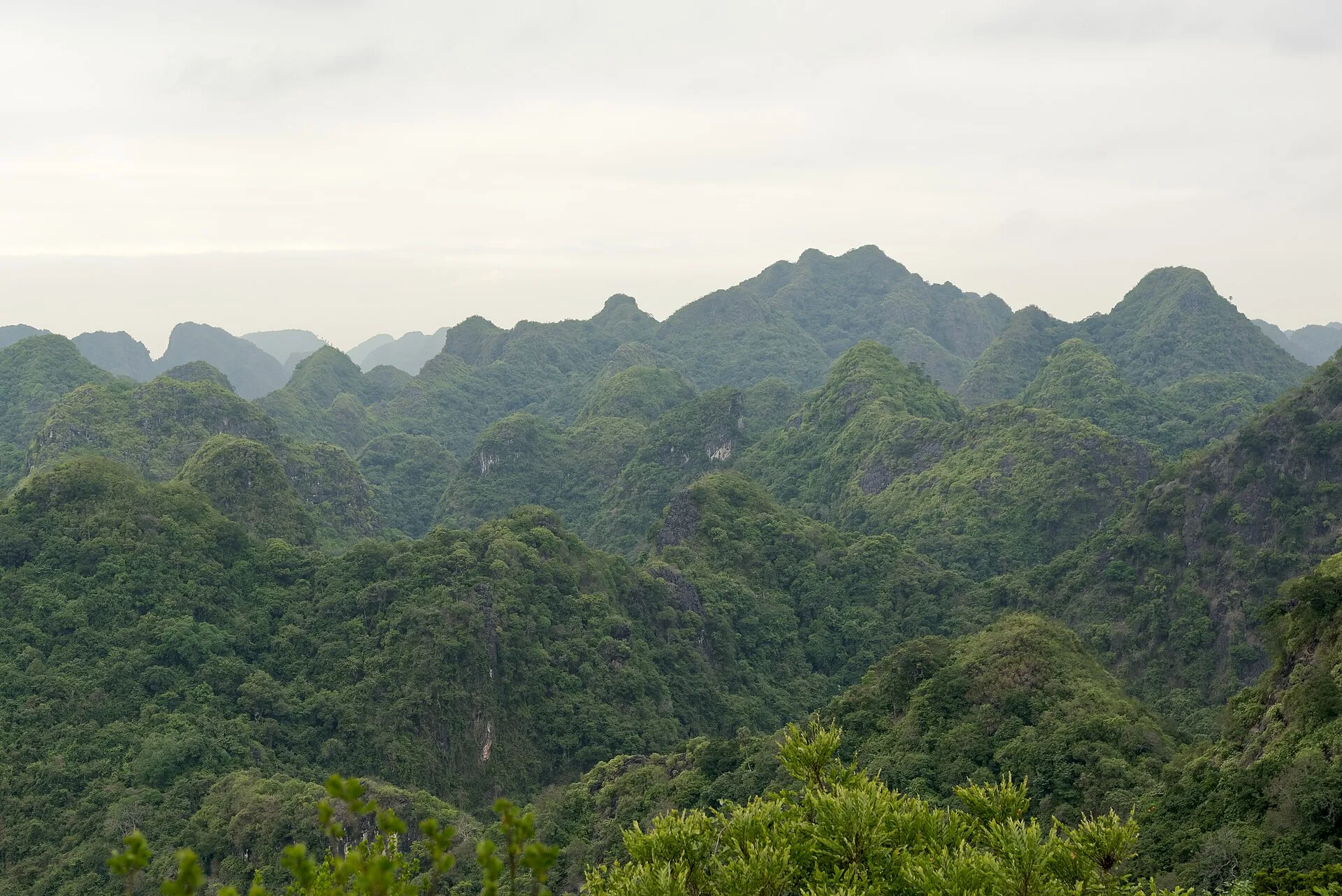
Cat Ba National Park protects the forested limestone hills that cover much of Cat Ba Island, along with caves, mangroves and coastal waters. Set up in 1986, it protects the critically endangered Cat Ba langur, found nowhere else on Earth. This guide covers the main hikes, the entrance fee, the wartime caves nearby and how to plan your day.
Updated October 2026.
1. Where is Cat Ba National Park?
The park headquarters sits in the middle of the island, around 15 kilometers north of Cat Ba Town on the cross-island road. By scooter it takes 20 to 30 minutes, with steep hills and sharp bends on the way. A taxi costs around VND 200,000–300,000 each way, and many travelers simply join a half-day or full-day hiking tour from town.
The park is part of the Cat Ba Biosphere Reserve, recognized by UNESCO in 2004, and lies inside the Ha Long Bay – Cat Ba Archipelago UNESCO World Heritage Site. Its land area is mostly steep karst forest, so even short trails feel like proper hikes.
2. How much is the entrance fee?
Recent sources from 2026 put the adult ticket at around VND 80,000, with reduced prices for children and students. Some guides still quote VND 60,000, so expect something in that range. Trung Trang Cave has a separate ticket, and a combined park and cave ticket of around VND 120,000 has been reported. Pay in cash.
The park is open daily, roughly 7 a.m. to 5 p.m., but the ticket booth may close earlier in the afternoon. Start before lunch if you want time for Ngu Lam Peak.
3. Which trails should you hike?
Most visitors do one short summit hike and one cave. Longer treks need a guide and a full day. Trail lengths vary between sources, so use these times as a guide:
- Ngu Lam Peak and Kim Giao Forest: Around one to two hours return from the headquarters. Moderate, with steep stone steps.
- Trung Trang Cave: 30 minutes to an hour. Easy, though there are steps up to the entrance.
- Viet Hai Village trek: Around four to six hours. Moderate, often finished by boat.
- Frog Lake: A full day with a guide. Hard, muddy after rain.
3.1. Ngu Lam Peak and Kim Giao Forest
This is the classic Cat Ba National Park hike and the one to pick if you only have a morning. The trail starts near the headquarters and climbs through Kim Giao Forest, named for the kim giao trees that grow here, before a steep final section of stone steps and rock to the lookout on Ngu Lam Peak. Expect 45 minutes to an hour on the way up.
From the top you look out over ridge after ridge of forested karst, with glimpses of the sea on clear days. The rock can be sharp and slippery after rain, so wear shoes with grip rather than sandals.
3.2. Trung Trang Cave
Trung Trang Cave sits just off the cross-island road, a few kilometers before the headquarters. It's roughly 300 meters long, lit with artificial lights and reached by a climb of around 100 to 140 steps. Inside, a few low sections make you duck. It's an easy add-on to Ngu Lam, and a good option on a hot or wet afternoon.
3.3. Viet Hai Village trek
The longer trail from the park toward Viet Hai Village crosses forest and farmland before dropping to a small village surrounded by cliffs. Distances quoted by tour companies vary, but plan on four to six hours with breaks. Most people finish with a boat from Viet Hai back to Ben Beo Pier near Cat Ba Town, which turns the hike into a loop through Lan Ha Bay. Go with a guide or a tour, as junctions are poorly marked.
See also: Lan Ha Bay Kayaking and Boat Trips: A Practical Guide
3.4. Frog Lake and longer treks
Frog Lake (Ao Ech) is a small lake deep in the forest and the goal of the park's toughest day hike. The trail is long, rough and muddy, with leeches in the wet season. Hire a guide through a reputable operator; quotes for a full-day guided trek are often VND 500,000–800,000. Bring plenty of water and leave early.
4. Can you see the Cat Ba langur?
Probably not, but it's still worth knowing about. The Cat Ba langur, also called the golden-headed langur, is a leaf-eating primate found only on Cat Ba Island and listed as Critically Endangered. Vietnamese agricultural press reported in late 2025 that the population had grown to around 90 individuals by October 2024, after decades of decline.
The langurs live on steep, remote cliffs in protected zones, including areas around Gia Luan, Hai Son and Viet Hai. They avoid people and the main trails, and most visitors never see one. Your best chance is with a specialist guide in a remote area, and the best thing you can do is keep noise down and never feed wildlife.
5. Hospital Cave
Hospital Cave is a natural cave that was turned into a secret field hospital between about 1963 and 1965, during the American War. It sits around 10 to 13 kilometers north of Cat Ba Town, on the way to the park, so it's easy to combine with a hike.
Inside, three levels hold 17 rooms, including operating rooms and a small cinema, and the hospital could treat around 100 patients at a time. A visit takes 30 to 60 minutes. It's usually open from about 8 a.m. to 5 p.m., and reported ticket prices range from VND 40,000 to 80,000. There's an altar to fallen soldiers inside, so dress and behave respectfully. The cave has closed for renovation in the past, so check recent reviews before you ride out.
6. Is Cannon Fort open?
Check before you go. Cannon Fort sits on a 177-meter hill about 2 kilometers from Cat Ba Town, with 1940s gun emplacements, tunnels and two cannons. Its viewpoint over Lan Ha Bay and the Cat Co beaches made it one of the island's top sunset spots. Since 2023, several guides have reported it officially closed or partly closed for safety and erosion reasons, while some visitors still report getting in for a small fee. Ask locally for the latest before you climb the hill.
7. When is the best time to hike?
The cooler months from October to April are the most comfortable for hiking. Trails are firmer, humidity is lower and the summit views are often clearer, although winter can be gray and misty. March to May and September to November are a good balance of warm days and fewer showers.
From June to September the forest is lush, but it's also hot, humid and often wet. Expect slippery rock, leeches after rain and the occasional storm closure. If you hike in summer, start by 7 a.m. and be off the summit before midday.
See also: Cat Ba Itinerary: How to Spend 2 or 3 Days
8. Good to know
- Footwear: Wear closed shoes with good grip. Ngu Lam's rock is sharp and slick when wet.
- Water and snacks: Carry at least 1.5 liters per person. Food options near the trails are limited.
- Cash: Bring Vietnamese dong for tickets, parking and drinks. Card payment is unlikely.
- Leeches: Common on longer trails after rain. Long socks and insect repellent help.
- Guides: Optional for Ngu Lam and Trung Trang, strongly recommended for Viet Hai and Frog Lake.
- Scooters: Ride only if you're experienced. The cross-island road is steep and winding.
9. FAQs about Cat Ba National Park
Is Cat Ba National Park worth visiting?
Yes, if you enjoy hiking. The Ngu Lam Peak climb gives you a real sense of the island's forested interior in a morning, and it pairs well with a Lan Ha Bay boat trip the next day.
How long do you need at Cat Ba National Park?
Half a day covers Ngu Lam Peak and Trung Trang Cave. Allow a full day for the Viet Hai or Frog Lake treks.
Do you need a guide for Cat Ba National Park?
Not for the short marked trails. For longer treks a guide is strongly recommended, because junctions are poorly signed and the forest is dense.
Can you hike Cat Ba National Park with kids?
Older children who are used to walking can usually manage Ngu Lam Peak with breaks. Trung Trang Cave is the easier choice for younger kids.
Cat Ba National Park is the place to see the island's wild, forested side, from the stone steps of Ngu Lam Peak to the wartime rooms of Hospital Cave. Go in the cooler months if you can, start early and save the long treks for a day with a guide.
After a morning on the trails, return to Flamingo Cat Ba Sea & Sand Resort on Cat Co 1 and Cat Co 2 beaches. Ease tired legs in the Japanese-style warm mineral pools of Ruriko Onsen (ages 16 and over), cool off in the Charm Pool, then watch the bay turn gold from Lan Ha Sky Bar on the 17th floor.
Photo: Jakub Hałun, Wikimedia Commons, CC BY 4.0.