Cat Ba Travel Guides
Cat Ba Langur: Where It Lives, How Many Remain and How to Help
Nearly 100 golden-headed langurs lived on the cliffs of the Cat Ba Archipelago in October 2025. Meet this rare primate and learn how to help.
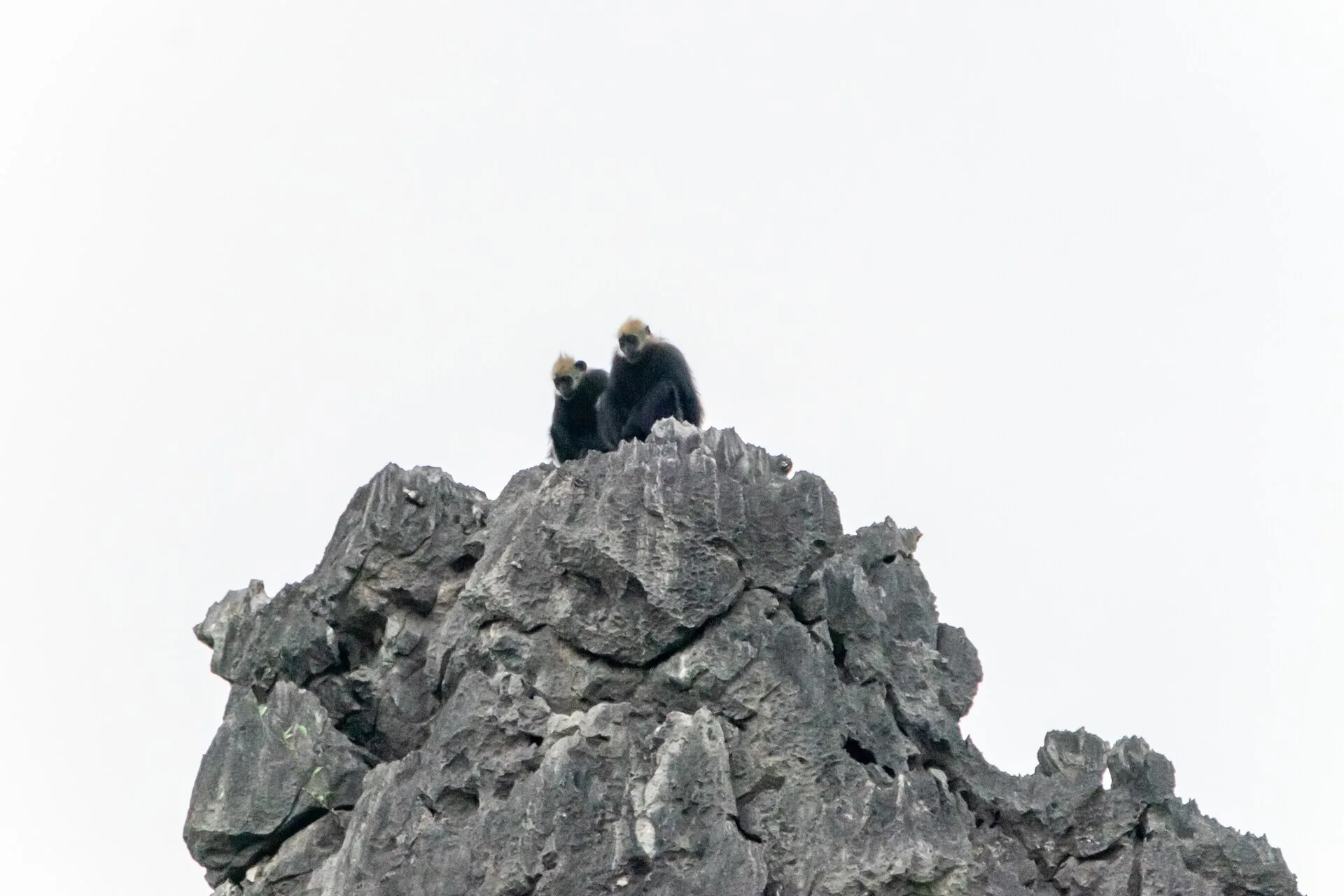
The Cat Ba langur, also known as the golden-headed langur, lives on the Cat Ba Archipelago and nowhere else on Earth. In 2000 fewer than 50 were left, and by October 2025 Hai Phong newspapers were reporting nearly 100. This guide explains where it lives, why it's still critically endangered and what you can do on your trip to help protect it.
Updated October 2026.
See also: Cat Ba National Park: Hikes, Caves and the Cat Ba Langur
1. What is the Cat Ba langur?
The Cat Ba langur is a primate found only on the Cat Ba Archipelago. Its scientific name is Trachypithecus poliocephalus, and locals know it as the golden-headed langur. It's one of Vietnam's endemic primates and one of the rarest on the planet.
Once you've seen a photo, it's hard to forget: a dark coat and a bright golden head that stands out against the gray limestone. The species is listed as Critically Endangered on the global IUCN Red List and in Vietnam's Red Data Book, and it has become a symbol of the island's wild side.
A genetic study of the species also found that it has adapted to living in a very small population and to drinking salty water, something rarely seen in primates.
2. Where does it live?
Cat Ba langurs live on the sheer limestone cliffs along the coast of the Cat Ba Archipelago, in the Cat Hai Special Zone of Hai Phong. They favor cliffs and caves around 100–150 meters above sea level, where they find both food and a safe place to shelter.
Most of the population lives in protected areas of Cat Ba National Park and the bays nearby. Langurs usually feed in the early morning and late afternoon, before and after the strongest sun. When you take a boat across Lan Ha Bay, the vertical limestone walls on either side are exactly the kind of habitat they prefer.
See also: Lan Ha Bay Guide 2026: How to Visit, Fees, Cruises and Best Time
3. How many Cat Ba langurs are left?
According to Hai Phong newspaper reports published in October 2025, nearly 100 Cat Ba langurs now live on the island. That's the highest count in decades, although the species is still critically endangered.
3.1. From thousands to fewer than 50
In the 1960s, the Cat Ba Archipelago was home to around 2,500–3,000 langurs. Illegal hunting and habitat loss then caused a steep decline, and between 1960 and 1990 the species lost about 98% of its population.
By 2000, fewer than 50 langurs were left, scattered in small groups cut off from one another. At the time, many scientists feared the golden-headed langur would disappear altogether.
3.2. A recovery that began in 2000
The Cat Ba Langur Conservation Project also started in 2000. It was first supported by Münster Zoo in Germany together with the conservation society ZGAP, and since 2019 it has been funded by Leipzig Zoo, also in Germany. National park rangers and community protection teams in Gia Luan, Tran Chau and Viet Hai patrol regularly, remove snares and protect the places where the langurs live.
Progress has come step by step. In September 2023, 82 langurs were recorded on Cat Ba. In the first six months of 2024, 15 infants were born and 14 of them were doing well, which took the population past 90. By October 2025, the total was close to 100.
4. Why is it still critically endangered?
Even with numbers rising, the species remains one of the primates with the smallest populations in the world. These are the main risks:
- Tiny population: With fewer than 100 animals as of October 2025, a single disease outbreak or natural disaster could do serious damage.
- Inbreeding: Groups that live apart have a shrinking gene pool, which can affect the health of future generations.
- Fragmented habitat: The groups live on separate stretches of cliff and rarely meet, so they can't exchange genes.
- Illegal hunting: It has fallen sharply, but snares in the forest are still a threat and have to be cleared regularly.
5. Can you see one in the wild?
Probably not, so keep your expectations low. Spotting a langur in the wild takes a lot of luck, and even rangers can go days without seeing one. The langurs live on rugged cliffs inside protected areas, well away from the usual visitor routes.
The best way to get to know them is through conservation education activities or, with luck, by spotting them from a distance on a boat in the bay. Don't try to find their habitat on your own, and don't pay anyone to take you into the protected areas.
One more thing: the monkeys that are used to people on Monkey Island are a different species, not golden-headed langurs.
See also: Monkey Island Cat Ba 2026: Boats, Beaches and Monkey Safety
6. How do you watch langurs responsibly?
If you're lucky enough to see langurs from a boat, whether on a day trip or a Lan Ha Bay cruise, keep these rules in mind:
- Keep well away from the cliffs, stay quiet and don't use loudspeakers or horns.
- Don't feed the langurs or throw anything onto the rocks.
- Don't fly a drone near the cliffs where they live.
- Choose a tour operator that takes conservation seriously and doesn't steer boats close to the cliffs for photos. Engine noise can frighten a group.
- Never buy, sell, keep or use wildlife products.
- Take your rubbish back to shore and use as little single-use plastic as you can on every trip.
7. FAQs about the Cat Ba langur
How many Cat Ba langurs are left?
Nearly 100, according to Hai Phong newspaper reports from October 2025. That's up from fewer than 50 in 2000.
Do Cat Ba langurs live anywhere else?
No. The species is endemic to the Cat Ba Archipelago around Cat Ba Island (often written Catba) and lives nowhere else in the world.
Are the monkeys on Monkey Island Cat Ba langurs?
No. The monkeys that come up to people on Monkey Island belong to a different species. Langurs live on cliffs in protected areas.
What can visitors do to help protect the Cat Ba langur?
Stay quiet and keep your distance on boat trips, don't fly drones near the cliffs, choose a responsible tour and never leave rubbish on the islands.
From fewer than 50 animals in 2000 to nearly 100 by October 2025, the Cat Ba langur shows how nature can recover when people work together to protect it. If you visit Cat Ba, a little knowledge and a quiet, respectful boat trip are the best ways to support this rare golden-headed primate.
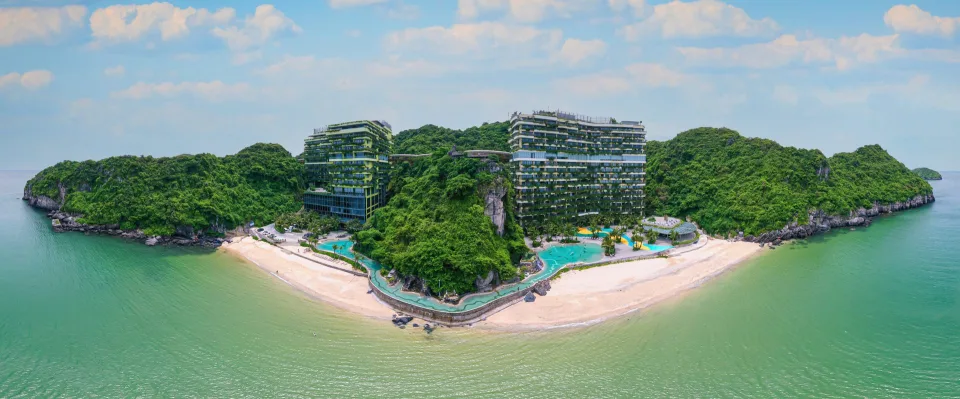
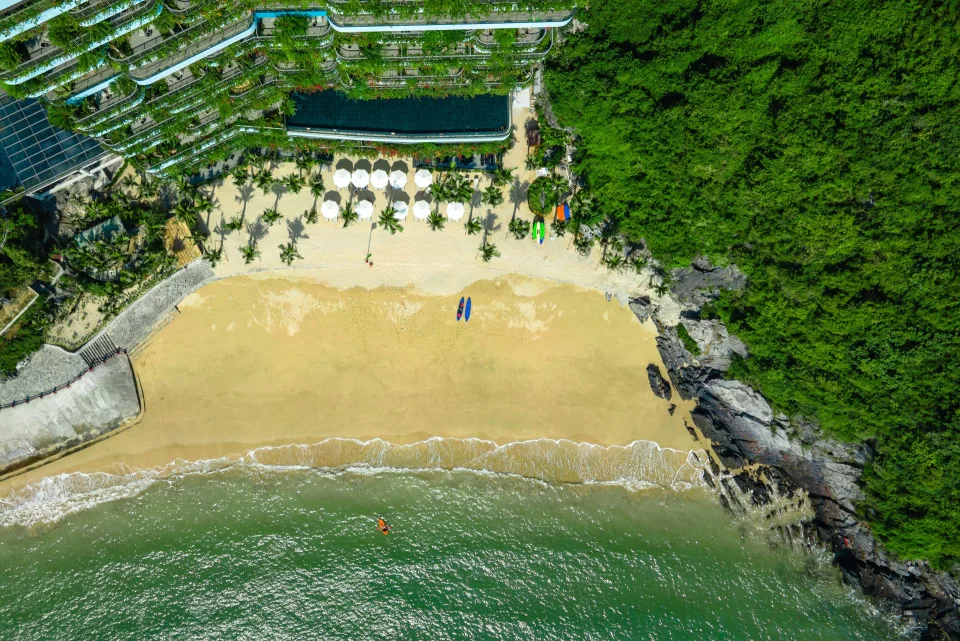
Beside Cat Co 1 and Cat Co 2 beaches, between Cat Ba's forested hills and Lan Ha Bay, Flamingo Cat Ba Sea & Sand Resort looks out over the archipelago's limestone ranges. Late in the afternoon, head up to Lan Ha Sky Bar on the 17th floor of the Sun tower, open until 11:00 p.m., to watch the cliffs change color. Next morning, a swim in the sea-facing Charm Pool, free for in-house guests, is an easy start.
Plan your stay at Flamingo Cat Ba Sea & Sand Resort:
- Rooms and residences with Lan Ha Bay views
- Restaurants and sky bars
- Ruriko Onsen and SEVA Spa
- Free extras when you book direct
Photo: Shawn O'Donnell, Wikimedia Commons, CC BY 4.0.