Cat Ba Travel Guides
Cat Ba Island Travel Guide 2026: How to Get There and What to Do
Everything you need for a Cat Ba Island trip in 2026: getting there from Hanoi, when to go, Lan Ha Bay, hikes, beaches, food, costs and where to stay.
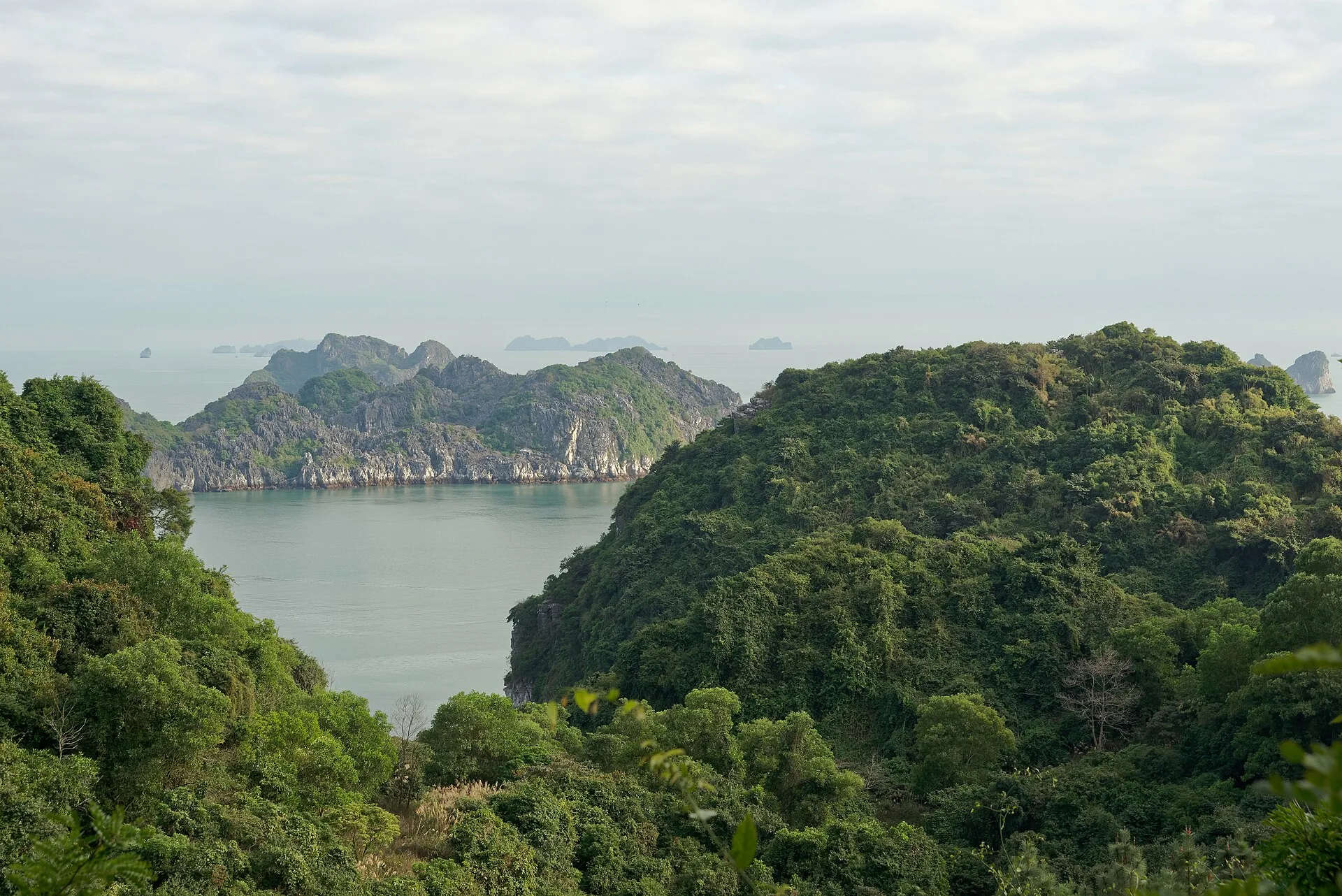
Cat Ba Island is the largest island in the Cat Ba Archipelago, on the southern edge of Ha Long Bay in northern Vietnam. It pairs the limestone karsts of Lan Ha Bay with a forested national park and a small harbor town, and it's about half a day from Hanoi. This guide covers how to get there, when to go, what to do and eat, what it costs and where to stay.
By Flamingo Cat Ba Sea & Sand Resort. Updated October 2026; fares, fees and timetables are for reference and can change.
See also:
- How to Get from Hanoi to Cat Ba (Bus, Ferry, Cable Car, Private Car)
- 15 Best Things to Do on Cat Ba Island
1. Where is Cat Ba Island, and is it worth visiting?
Cat Ba Island is part of Hai Phong, about 140 km east of Hanoi by road, and since July 2025 it has belonged to the Cat Hai Special Zone. The island shares the same limestone scenery as Ha Long Bay, with one big difference: Lan Ha Bay, off its southeast coast, usually sees fewer boats than Ha Long Bay.
It's well worth the trip if you want more than a cruise. You can spend one day on the water, the next on a forest trail and every evening eating seafood by the harbor. The heart of the island is Cat Ba National Park, founded in 1986 and home to the Cat Ba langur, a critically endangered monkey found only in this archipelago.
The archipelago became a UNESCO Biosphere Reserve in 2004. In 2023, UNESCO extended the Ha Long Bay World Heritage Site to include it, so the area is now listed as Ha Long Bay – Cat Ba Archipelago.
See also: Lan Ha Bay vs Ha Long Bay: Which One Should You Visit?
2. When is the best time to visit Cat Ba?
The best time to visit Cat Ba for swimming and boat trips is April to October. If you prefer cooler weather, quieter beaches and hiking, October to April suits you better. Here's how the year breaks down:
- May to August: the sea is around 28–30°C, with plenty of sunshine for swimming and kayaking. May to July is peak season, and Vietnamese holidays such as April 30, May 1 and September 2 get very busy, so book early.
- July to October: typhoon season, peaking in August and September. The cable car, ferries and speedboats can stop running when a storm or tropical depression moves through.
- September to November: the weather softens and the crowds thin out after summer. Tu hai clams, a local favorite, are in season from around September to March.
- December to February: December and January are often only 15–20°C and the sea is too cold for most swimmers. The upside: misty mornings on the bay and comfortable weather for hiking.
See also: Best Time to Visit Cat Ba: Weather Month by Month
3. How do you get to Cat Ba Island?
There are three main ways onto Cat Ba: the cable car or car ferry from neighboring Cat Hai Island, the speedboat from central Hai Phong and the car ferry from Tuan Chau in Ha Long. The right one depends on where you start, whether you're bringing a vehicle and what time you'll reach the pier.
3.1. From Hanoi
From Hanoi, the Hanoi–Hai Phong Expressway and the Tan Vu–Lach Huyen Bridge take you to Cat Hai Island in about three hours. From there, you have two ways across:
- Cat Hai–Phu Long cable car: a good fit if you're not bringing a vehicle. According to Bao Hai Phong (the Hai Phong newspaper), it has run daily since April 8, 2026, departing toward Cat Ba at 9, 10 and 11 a.m. and 1:30, 2:30 and 3:30 p.m.; the ride takes 10–15 minutes. Tickets cost VND 70,000 per trip for adults and children taller than 1 m, and smaller children ride free. Service can pause in strong wind, so check the schedule the day before.
- Dong Bai–Cai Vieng ferry: the only way to take a car or motorbike across from Cat Hai. It runs daily from 5 a.m. to 6:30 p.m., and sometimes until around 7 p.m. in summer. Weekends and holidays can mean long lines.
If you're not driving, a limousine van from Hanoi is the simplest choice. Many operators pick up in the Old Quarter and include the sea crossing, but confirm this when you book. Door to door it takes about four to five hours, and fares listed on redBus in October 2026 run VND 280,000–420,000 per person one way.
From Phu Long station or Cai Vieng pier, it's still about 20 km along the coast to Cat Ba Town and the Cat Co beaches; a connecting bus or taxi covers the last stretch.
See also: Cat Ba Cable Car: Cat Hai to Phu Long Schedule, Tickets and Tips
3.2. From Hai Phong
From central Hai Phong, the fastest route is the speedboat from Binh Pier to Cat Ba, which takes about 45–50 minutes. Fares run around VND 200,000–300,000 per person one way (October 2026). There are only a few sailings a day, mostly in the morning and early afternoon, so check the current timetable and book a day ahead. If you fly into Hai Phong's Cat Bi International Airport, take a taxi to Binh Pier for the speedboat, or over the Tan Vu–Lach Huyen Bridge to the cable car. To bring a vehicle, drive to Cat Hai Island and take the Dong Bai–Cai Vieng ferry.
3.3. From Ha Long
From Ha Long, the Tuan Chau–Gia Luan ferry carries foot passengers, motorbikes and cars, and each crossing takes about 50–60 minutes. Foot passengers pay around VND 60,000–80,000 one way (October 2026). In low season there are only about three sailings each way, and departures can be canceled in bad weather or when few passengers turn up.
The last ferry from Gia Luan usually leaves around 4 p.m., so if you're heading back to Ha Long, leave Cat Ba Town by 3 p.m. at the latest. Gia Luan is on the island's northern tip, 20–25 km from town, and the road through Cat Ba National Park takes about 40 minutes. Taxis are scarce at the pier, so arrange a pickup if you're not driving.
3.4. Getting around the island
Taxis and rented motorbikes are the most flexible ways to reach farther sights such as the national park, Hospital Cave and Trung Trang Cave. Motorbikes and scooters rent for around VND 100,000–150,000 a day in 2026, more for newer models or in peak season. The forest roads are steep and winding, so ride only if you're experienced.
The town waterfront and the Cat Co beaches are easy to walk. Ben Beo Pier, where most Lan Ha Bay boats leave, is about 1.5–2 km from the town center. Viet Hai Village has no direct road access; section 4.4 explains how to get there.
4. What to do on Cat Ba Island
Cat Ba packs a bay, beaches, forest, caves and fishing villages into one island, so even two or three days lets you mix several kinds of trips. These are the highlights, with links to our detailed guides.
4.1. Lan Ha Bay boat trips and kayaking
Lan Ha Bay covers more than 7,000 hectares and is the reason many people come to Cat Ba. Day tours usually leave Ben Beo Pier around 9 a.m. and return between 2:30 p.m. and 4 p.m. A typical route takes in Ba Trai Dao (three small beaches side by side), Sang Toi Cave, a kayak paddle between the karsts and lunch on board.
Since January 1, 2026, the Lan Ha Bay sightseeing fee has been VND 120,000 per adult and VND 60,000 per child aged six and over. Many tours include it, so ask when you book. From around May to mid-August, many tours skip Ba Trai Dao and Sang Toi Cave and swim somewhere else, so check the route before you pay.
Kayaking takes you right to the foot of the cliffs. May to July brings clear skies and warm water, which suits first-timers. Wear a life jacket, stay with your group and head back when the wind picks up.
See also: Lan Ha Bay Kayaking and Boat Trips: A Practical Guide
4.2. Monkey Island
Monkey Island is about 10 minutes by boat from Ben Beo Pier. It has a troop of free-roaming monkeys and two sheltered white-sand beaches called Cat Dua. Keep food, sunglasses and phones out of sight, because the monkeys are bold and quick.
4.3. Cat Co beaches
The Cat Co beaches sit right next to Cat Ba Town and are linked by a walking path along the cliffs. Cat Co 1 and Cat Co 2 lie directly in front of Flamingo Cat Ba Sea & Sand Resort, and the sun loungers and beach services there are reserved for in-house guests. Cat Co 3 is a public beach near town and a good place for a swim before check-in.
Tung Thu is another public beach. Entry is usually free, while parking, loungers and freshwater showers cost extra. The water is warmest and calmest from May to August.
See also: Cat Ba Beaches: Cat Co 1, 2, 3 and Beyond
4.4. Cat Ba National Park and Viet Hai Village
Cat Ba National Park covers about 15,200 hectares of forest and sea and is open daily from around 7 a.m. to 5 p.m. The classic hike runs through the Kim Giao forest to Ngu Lam Peak and takes about two to three hours up and back. If you'd rather skip the steep climbs, the Ao Ech (Frog Lake) trail is gentler.
Under the Hai Phong fee schedule in force since January 1, 2026, park tickets are priced by route, from VND 80,000 to VND 160,000 per adult; the Kim Giao–Ngu Lam route costs VND 120,000. Children aged six and over pay half, and children under six go free.
For a bigger challenge, the forest trek to Viet Hai Village is about 10–12 km and takes six to seven hours. To skip the full hike, take a boat from Ben Beo Pier to Viet Hai Pier, then cycle or ride an electric cart about 5 km into the village. The park's forest is also home to the Cat Ba langur, or golden-headed langur.
See also: Cat Ba National Park: Hikes, Caves and the Cat Ba Langur
4.5. Hospital Cave, Trung Trang Cave and Cannon Fort
Hospital Cave, on the road between Gia Luan and town, is a three-level, 17-room hospital built inside a mountain between 1963 and 1965. Travel sites list adult tickets at VND 40,000–80,000, so check at the ticket desk. Trung Trang Cave is about 15 km northwest of town, and adult tickets cost around VND 120,000 under the 2026 fee schedule.
Cannon Fort, on a hilltop near town, used to be the classic sunset viewpoint over Lan Ha Bay. According to early-2026 reports, the site was still temporarily closed for restoration, with barriers and signs on the access road. Don't climb past the barriers; ask your hotel whether it has reopened before you go.
Opening hours can change with the season and are set by each site's management.
4.6. Cai Beo fishing village
Cai Beo fishing village sits beside Ben Beo Pier on the Cai Beo archaeological site, a national heritage site with traces of settlement dating back around 7,000 years. Today, rows of floating fish farms surround the village, and some Lan Ha Bay tours stop for lunch at the raft houses nearby.
4.7. Rock climbing and Cat Ba after dark
Cat Ba is a well-known rock climbing destination, and the best climbing season runs from around November to April. After dark, browse the night market, eat grilled seafood and snails by the harbor or join a squid-fishing boat trip on the bay.
5. What to eat on Cat Ba
Fresh seafood is the star on Cat Ba, and each season brings its own specialties. Look for tu hai (snout otter clams), mantis shrimp, blue swimmer crab and mud crab, grouper, squid, lobster, blood cockles and Hai Phong–style stir-fried snails. For a break from seafood, try bun tom (shrimp noodle soup) or grouper noodle soup.
Seafood restaurants cluster along 1/4 Street (Mot Thang Tu Street) and Nui Ngoc Street near the harbor. At Cat Ba Market, you can choose seafood by weight and have a nearby restaurant cook it. Before you order, ask the price per kilo, watch the seafood being weighed and confirm whether cooking is included. Only eat horseshoe crab at well-known restaurants, because a similar-looking species can cause poisoning.
See also: What to Eat in Cat Ba: Seafood and Local Dishes
6. A 3-day Cat Ba itinerary
Three days gives you time for the beach, the bay and the forest without rushing. This plan starts in Hanoi; swap days two and three if the weather calls for it:
- Day 1: Leave Hanoi before 7 a.m. to catch a morning cable car. Have a seafood lunch in town, spend the afternoon on Cat Co beach and walk the night market after dinner.
- Day 2: Take a full-day Lan Ha Bay tour from Ben Beo Pier with kayaking, a swim at Ba Trai Dao or another beach depending on the season, and lunch on board. Relax in the evening or join a squid-fishing trip.
- Day 3: Check out early and cross the island to Cat Ba National Park to hike Ngu Lam Peak, then stop at Hospital Cave. In the afternoon, take the Gia Luan ferry to Ha Long (the last one usually leaves around 4 p.m.) or head back to Phu Long for Hanoi. The cable car only runs until mid-afternoon, so check the last departure in advance.
See also:
- Cat Ba Itinerary: How to Spend 2 or 3 Days
- Cat Ba with Kids: How to Choose a Family Resort and Plan Your Trip
- Cat Ba Honeymoon: Ocean-View Rooms and a Romantic 3-Day Itinerary
7. How much does a trip to Cat Ba cost?
Budget about VND 1.3–2.2 million per person for a round-trip limousine, one Lan Ha Bay tour, the Ngu Lam hike and Hospital Cave, before food and accommodation. What you spend depends mostly on where you stay and which bay tour you choose. These prices are for reference as of October 2026 and vary by season and operator:
- Getting there: VND 280,000–420,000 per person one way by limousine van from Hanoi, plus VND 70,000 for the cable car if your fare doesn't include the crossing. The speedboat from Hai Phong costs VND 200,000–300,000, and the ferry from Ha Long VND 60,000–80,000 per foot passenger.
- Lan Ha Bay day tour: VND 550,000–600,000 per person on a wooden or steel boat, around VND 700,000 on a mid-range cruise and about VND 1,050,000 on a five-star cruise. Some operators add VND 100,000 on Fridays, Saturdays and holidays.
- 2026 sightseeing fees per adult: VND 120,000 for the Lan Ha Bay route (often included in tour prices), VND 120,000 for the Kim Giao–Ngu Lam trail and around VND 40,000–80,000 for Hospital Cave. Children under six visit the bay and the national park for free.
Room rates range widely, from guesthouses in town to beachfront resorts, and usually rise in summer and on holidays, so compare prices and book once your dates are set.
8. Where to stay on Cat Ba Island
Where you stay on Cat Ba depends on the pace you want. Each area has its own appeal:
- Cat Ba Town: plenty of hotels and restaurants around the harbor, lower prices and easy evenings out; waterfront hotels on the main road can be noisy.
- Cat Co beach area: closest to the sea and a good fit for families with young children, couples and anyone who wants a swim every day; rooms usually cost a little more than in town.
- On Lan Ha Bay: an overnight cruise or a floating homestay near Cai Beo makes for a different kind of night, but it depends on the weather. Since January 1, 2026, a one-night stay on the bay carries a fee of VND 400,000 per adult (more for longer stays), so check whether your price includes it.
- Viet Hai Village: inside the national park, quiet and ideal for keen hikers; rooms are basic, so book ahead and bring cash.
See also: Where to Stay in Cat Ba: Town, Beach or Resort?
9. Good to know before you go
- Check cable car, ferry and speedboat schedules the day before. The cable car stops by mid-afternoon, the last ferries and speedboats leave between late afternoon and early evening, and every route can be suspended during storms.
- In summer and around Vietnamese holidays such as April 30, May 1 and September 2, book rooms and transport early and set off early to avoid lines at the ferry.
- Ask for seafood prices per kilo, check the weight before it's cooked and reserve a table on weekends.
- Beaches out on the bay have almost no services, so bring water and snacks and take your trash back to the boat.
- Carry some cash for Viet Hai Village and other places far from town.
10. Cat Ba Island FAQs
Is Cat Ba Island worth visiting?
Yes. It combines Lan Ha Bay's limestone scenery with beaches, a national park and good seafood, and Lan Ha Bay usually sees fewer boats than Ha Long Bay. Plan at least two days to make the trip worthwhile.
How many days do you need on Cat Ba?
Two days and one night is enough for the beach and one Lan Ha Bay tour. Allow three days if you also want to hike in the national park, see the caves or spend a night on the bay.
Do you need a tour to visit Cat Ba Island?
No. You can get around the island on your own and book a boat tour or a private boat just for Lan Ha Bay; tours are sold around the harbor and through hotels.
Is Cat Ba worth visiting in winter?
Yes, if swimming isn't your priority. December and January are often only 15–20°C and the sea is cold, but winter is a good time to hike Ngu Lam Peak, cycle to Viet Hai Village, see the bay in the morning mist and eat tu hai clams in season.
Is Cat Ba part of the Ha Long Bay UNESCO site?
Yes. Since 2023, the Cat Ba Archipelago has been part of the Ha Long Bay – Cat Ba Archipelago World Heritage Site, and it has been a UNESCO Biosphere Reserve since 2004.
Which province is Cat Ba Island in?
Cat Ba Island is part of Hai Phong city. Since July 1, 2025, the archipelago has belonged to the Cat Hai Special Zone.
Cat Ba Island is easy to plan once you know how to get across, when to go and whether you're coming for the bay, the beaches or the forest. Pick your season, book the crossing that suits you and leave room for a slow evening by the water.
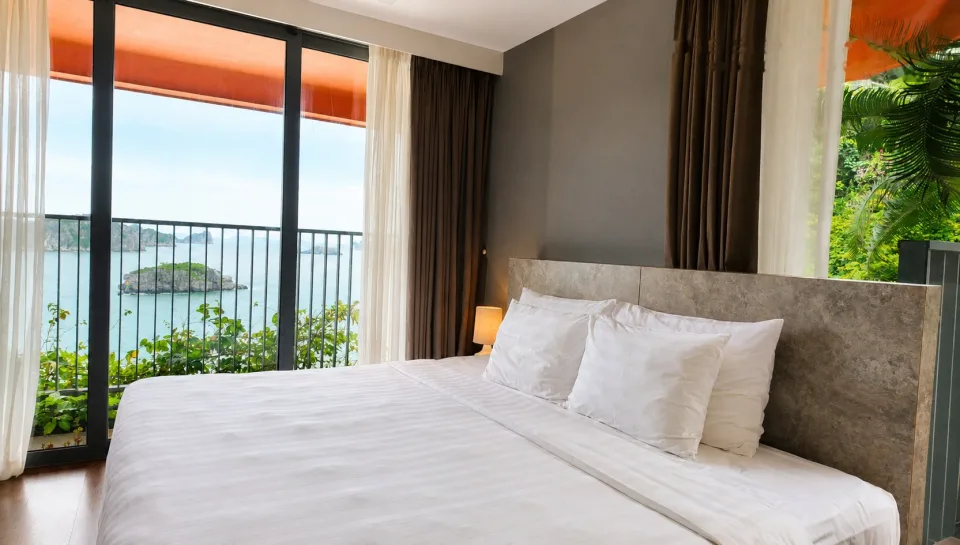
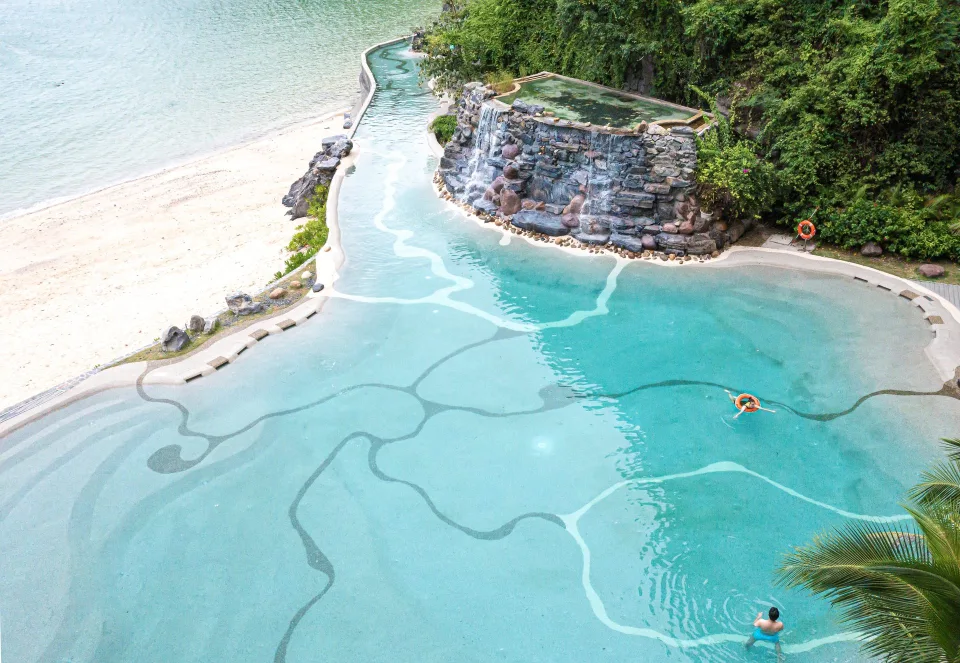
If you'd like to stay right on the beach, Flamingo Cat Ba Sea & Sand Resort sits on Cat Co 1 and Cat Co 2. In-house guests get free use of the beaches and sun loungers, the Shell Pool, an infinity pool on the 4th floor of the Sea tower, and the Cau May Sky Walk, which links the three towers on the 11th and 12th floors. Lan Ha Sky Bar on the 17th floor is the place to watch the evening light over the bay, and reception is open until 2 a.m. if you arrive late.
Plan your stay at Flamingo Cat Ba Sea & Sand Resort:
- Rooms and residences with Lan Ha Bay views
- Restaurants and sky bars
- Ruriko Onsen and SEVA Spa
- Free extras when you book direct
Photo: Jakub Hałun, Wikimedia Commons, CC BY 4.0.