Cat Ba Travel Guides
Cat Ba Biosphere Reserve: Why UNESCO Recognized It Twice
Over 26,000 hectares of forest, sea and limestone islands, thousands of species and two UNESCO listings: what to know before you visit Cat Ba.
The Cat Ba Biosphere Reserve is one of Vietnam's most valuable natural areas, an archipelago where primary forest on limestone, mangroves and coral reefs all sit side by side. Before you land on Cat Ba Island (often written Catba), it helps to know what a biosphere reserve is, how big this one is, why UNESCO has recognized Cat Ba twice and how to visit it the right way.
Updated October 2026. Fees and opening hours may change with the season and by decision of the managing authority.
See also: Cat Ba National Park: Hikes, Caves and the Cat Ba Langur
1. Where is the Cat Ba Biosphere Reserve?
The Cat Ba Biosphere Reserve covers the Cat Ba Archipelago in the Cat Hai Special Zone of Hai Phong. Under the management regulation Hai Phong issued in 2024, it includes Cat Ba Town, six communes (using the former administrative boundaries) and the surrounding waters. The six are Gia Luan, Hien Hao, Phu Long, Viet Hai, Tran Chau and Xuan Dam.
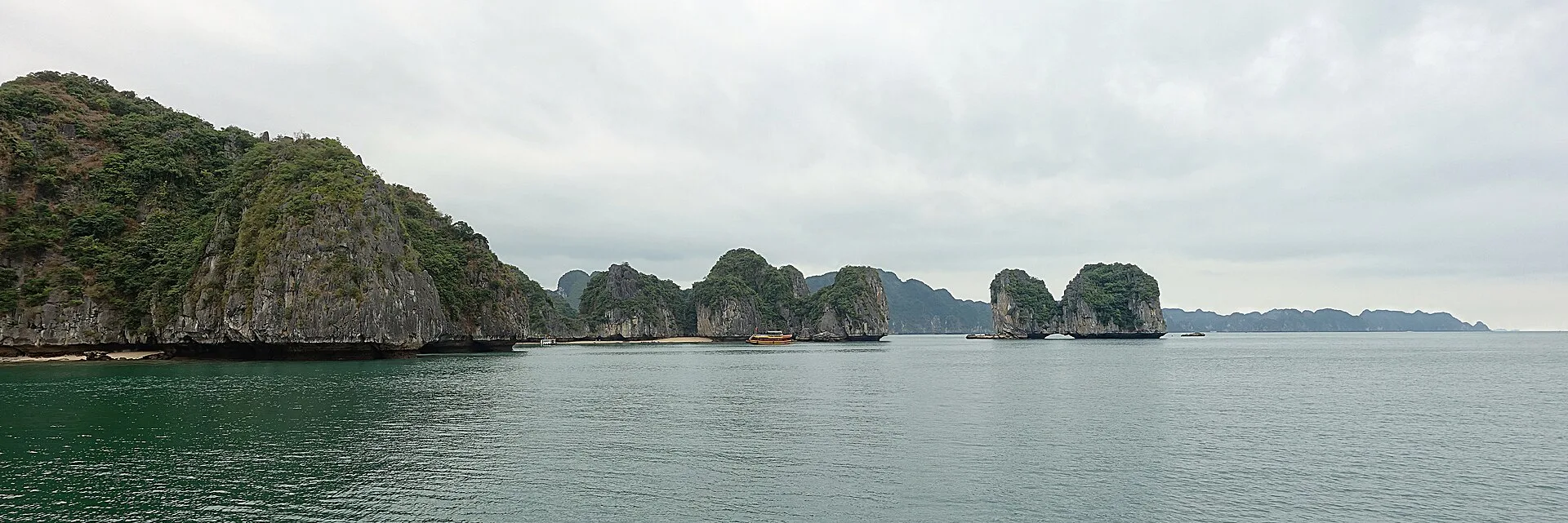
In other words, almost the whole island you'll explore, from the forests of Cat Ba National Park to the water of Lan Ha Bay, lies inside the reserve. The archipelago has more than 350 limestone islands of all sizes, and Cat Ba Island is the largest of them.
2. What is a biosphere reserve?
A biosphere reserve is an area of land, coastal or mixed ecosystems that is recognized internationally under UNESCO's Man and the Biosphere (MAB) Programme. Put simply, its goal is to balance nature conservation with sustainable economic development for the people who live there.
Most biosphere reserves are divided into three zones. The core zone is strictly protected. The buffer zone surrounds it and allows ecotourism, research and education. The transition zone is where people live, work and develop tourism.
3. What has UNESCO recognized on Cat Ba?
UNESCO has recognized the Cat Ba Archipelago twice: first as a World Biosphere Reserve in 2004, then as part of a World Natural Heritage Site with Ha Long Bay in 2023.
3.1. World Biosphere Reserve, 2004
On December 2, 2004, UNESCO named the Cat Ba Archipelago a World Biosphere Reserve. The listing recognized its outstanding biodiversity, landscape and culture, as well as its socio-economic value.
3.2. Ha Long Bay – Cat Ba Archipelago World Heritage Site, 2023
On September 16, 2023, at the 45th session of the World Heritage Committee in Riyadh, Saudi Arabia, UNESCO recognized Ha Long Bay – Cat Ba Archipelago as a World Natural Heritage Site. It was Vietnam's first World Heritage Site to stretch across more than one province or city, covering parts of Quang Ninh Province and Hai Phong.
Ha Long Bay had already been honored by UNESCO twice, in 1994 and 2000. Extending the site to the Cat Ba Archipelago recognized that the two limestone seascapes share one continuous landscape, the same geology and connected ecosystems.
See also: Lan Ha Bay vs Ha Long Bay: Which One Should You Visit?
4. How big is the Cat Ba Biosphere Reserve?
According to the boundary review approved by Hai Phong, the Cat Ba Biosphere Reserve covers about 26,419 hectares, split into three functional zones:
- Core zone: About 6,279 hectares in two areas, one in Phu Long commune and the other across Gia Luan, Tran Chau and Viet Hai communes and part of Cat Ba Town. Nothing may be built here unless it serves conservation.
- Buffer zone: About 8,797 hectares around the core, where ecotourism and environmentally friendly buildings are allowed.
- Transition zone: About 11,343 hectares, where most residents, tourism and local business are concentrated.
In practice, everyday life and most tourism happen in the transition zone, while the most pristine primary forest and the wildest coves are kept for the core zone.
5. What makes the reserve special?
5.1. Seven ecosystems in one archipelago
Even a short trip takes you through several ecosystems, because the Cat Ba Archipelago packs seven typical tropical ecosystem types into a fairly small area. These are the ones you're most likely to come across:
- Tropical rainforest on limestone: Mostly inside Cat Ba National Park, with many ancient trees and valuable medicinal plants.
- Mangrove forest: Along the coves and tidal creeks, where many kinds of shrimp and fish breed.
- Coral reefs and seagrass beds: Hidden under the clear water of Lan Ha Bay and around its small sandy beaches.
- Caves and enclosed lagoons: Lakes ringed by limestone peaks, known locally as tung and ang, a signature of drowned karst.
Cat Ba also holds three conservation titles at once: national park, marine protected area and World Biosphere Reserve. That combination of forest and sea is what makes the archipelago so unusually diverse.
5.2. Thousands of species, including the Cat Ba langur
Surveys of the Cat Ba Biosphere Reserve have recorded more than 3,100 species of plants and animals, with over 1,800 on land and over 1,300 in the sea. Updated figures from Vietnam's Nature and Biodiversity Conservation Agency put the total at more than 4,100 species, including 63 mammal species, 214 bird species and 193 coral species.
If you love wildlife, the star is the Cat Ba langur, a primate found only in this archipelago and one of the most endangered animals in the world. The forests on the limestone hills are the last home of this rare golden-headed langur.
See also: Cat Ba Langur: Where It Lives, How Many Remain and How to Help
6. Where can you explore the reserve, from Cat Ba National Park to Lan Ha Bay?
Once you're on Cat Ba, you're already inside the biosphere reserve. These places show its natural value most clearly:
- Cat Ba National Park: Several trekking routes through primary forest, ideal if you like hiking and want to learn about the island's plants.
- Lan Ha Bay: The best place to see the reserve's marine side, with clear blue-green water, hundreds of limestone islands and small sandy beaches. Explore it on a boat trip or a Lan Ha Bay cruise. Kayaking on the Cat Ba bays has been suspended by the local authority since November 15, 2024, and the suspension was extended on November 27, 2025. Some boats now offer rides in bamboo rowing boats instead.
- Viet Hai Village: A small village in a valley inside the national park, where islanders keep a quiet, traditional way of life.
- Cai Beo fishing village: The gateway to Lan Ha Bay, with an archaeological site that shows people lived here around 7,000 years ago.
See also: Cai Beo Floating Village, Cat Ba: History, Boat Trips and Tips
7. How do you visit the reserve responsibly?
Every trip leaves a footprint on the biosphere reserve. A few small habits help Cat Ba keep its beauty for the next visitors:
- Stay on the trails, and don't pick plants, break branches or take wild animals home as souvenirs.
- Don't feed animals. Keep your distance and stay quiet when you meet wildlife.
- Use less single-use plastic, and carry your rubbish out of the forest and off the bay.
- Don't buy anything made from coral or rare animals.
- Choose tours and boats that look after the environment, and follow the instructions of rangers and guides.
8. FAQs about the Cat Ba Biosphere Reserve
When did UNESCO recognize the Cat Ba Biosphere Reserve?
In 2004. On December 2, 2004, UNESCO recognized the Cat Ba Archipelago as a World Biosphere Reserve.
Is a biosphere reserve the same as a World Natural Heritage Site?
No. Biosphere reserves belong to UNESCO's Man and the Biosphere Programme and focus on balancing conservation with development. World Natural Heritage status comes under the World Heritage Convention and recognizes outstanding universal value. Cat Ba holds both titles.
Can visitors enter the core zone?
The core zone is set aside mainly for conservation and research. Stick to the trekking routes and sites that Cat Ba National Park has opened to visitors, and follow the rangers' instructions.
Can you see Cat Ba langurs in the wild?
It's very hard. Cat Ba langurs live in strictly protected areas, so don't go looking for their habitat on your own. Stay on the official visitor routes.
How much does it cost to visit Cat Ba National Park and Lan Ha Bay?
Under Hai Phong's fee schedule in force since January 1, 2026, a Cat Ba National Park ticket costs VND 160,000 per adult and VND 80,000 per child, and individual trails in the park cost VND 80,000–120,000. The Lan Ha Bay route costs VND 120,000 per adult and VND 60,000 per child aged 6 and over, and children under 6 go free.
Recognized twice by UNESCO, the Cat Ba Biosphere Reserve is more than a beautiful view: it's a shared home for thousands of species. Travel lightly and stay on the trails, and you'll leave it as wild as you found it.
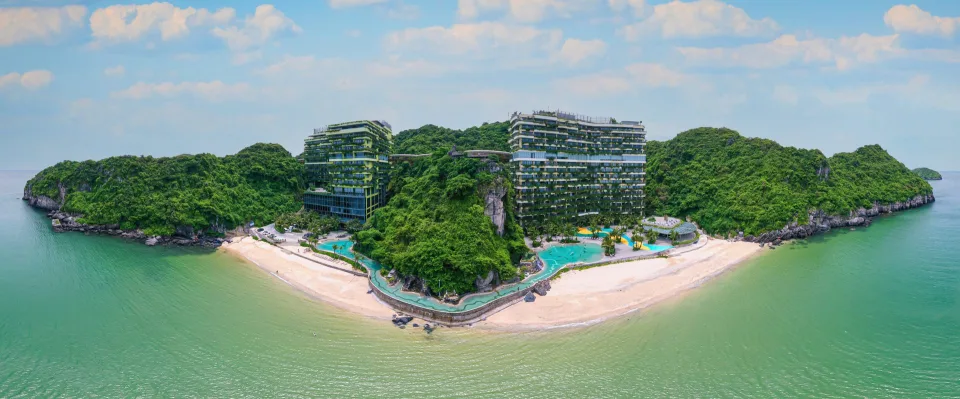
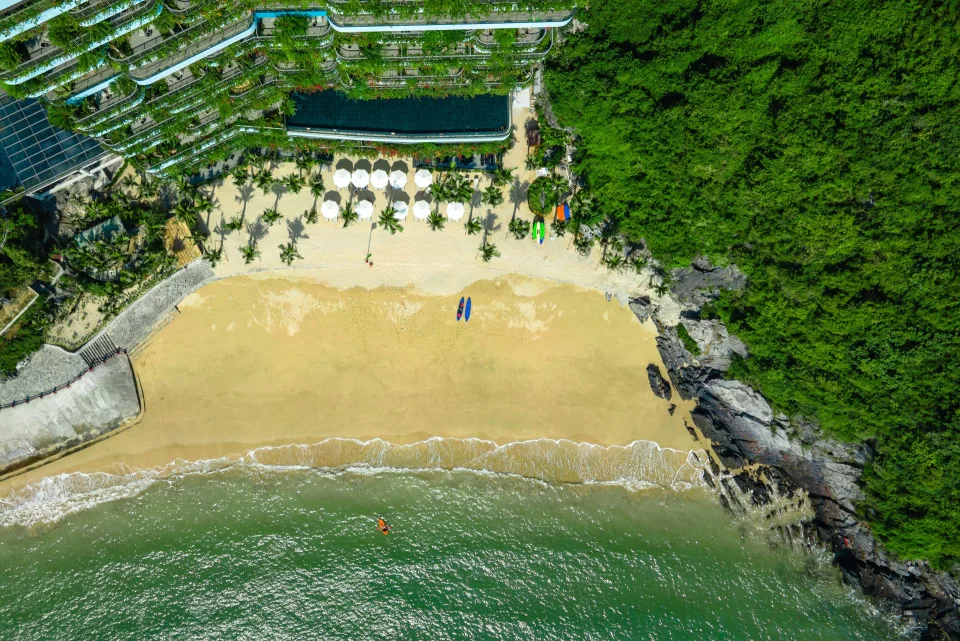
Beside Cat Co 1 and Cat Co 2 beaches, between green forest and Lan Ha Bay, Flamingo Cat Ba Sea & Sand Resort lets you take in the reserve from the balcony of an ocean-view room. Early in the morning, walk the Cau May Sky Walk on the 11th and 12th floors, when mist often lingers on the hills. After a day of trekking, rest your legs in the Japanese-style warm mineral-water baths of Ruriko Onsen (ages 16 and over).
Plan your stay at Flamingo Cat Ba Sea & Sand Resort:
- Rooms and residences with Lan Ha Bay views
- Restaurants and sky bars
- Ruriko Onsen and SEVA Spa
- Free extras when you book direct
Photo: Velvet, Wikimedia Commons, CC BY-SA 4.0.